
In 2026, the “green” beauty movement has reached a tipping point. With the full implementation of global regulations like the EU Packaging and Packaging Waste Regulation (PPWR), skincare brands are no longer just looking to be “sustainable”—they are aiming for plastic-free circularity.
For years, the biggest hurdle for skincare packaging was the label. While glass and aluminum bottles are easily recyclable, traditional plastic (BOPP) labels often contaminate the recycling stream or end up as microplastics.
If you are launching or rebranding a skincare line this year, here are the top 2026 plastic-free label materials that combine high-end aesthetics with extreme environmental responsibility.
1. Stone Paper (The Moisture-Proof Hero)
If your product lives in the shower or contains heavy oils, Stone Paper is the gold standard for 2026.
-
The Science: Made from 80% calcium carbonate (waste marble and limestone) and a bio-resin binder.
-
Why it’s Plastic-Free: It uses no trees, no water, and no bleach in production.
-
The Benefit: It is naturally waterproof and oil-resistant. Unlike traditional paper, it won’t peel, yellow, or turn transparent when exposed to a face oil or a humid bathroom.
2. Bagasse & Agave (Upcycled Agricultural Waste)
2026 is the year of “Waste-to-Worth” branding. Instead of virgin wood pulp, brands are turning to agricultural by-products.
-
Bagasse: This is the fibrous residue left after crushing sugarcane. It has a thick, tactile, premium feel that pairs beautifully with “clean beauty” aesthetics.
-
Agave Fiber: Sourced from the waste of tequila production, agave labels offer a unique, slightly flecked texture that tells a story of regeneration before the customer even opens the bottle.
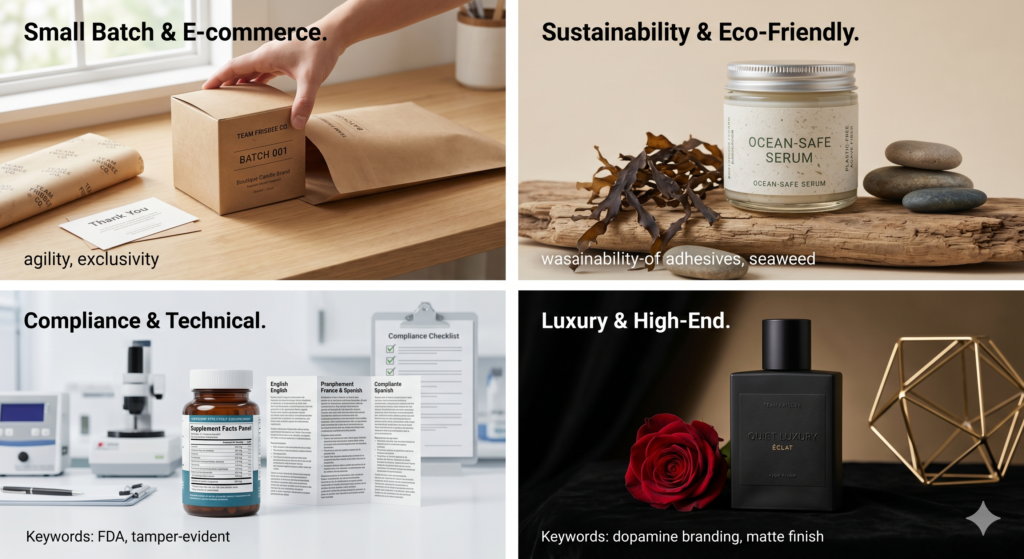
3. Seaweed-Based Films (The Ocean-Safe Future)
Seaweed is the breakout star of 2026 packaging.
-
The Innovation: Seaweed-based films are now being used for transparent “no-label” looks. They are entirely home-compostable and carbon-negative.
-
The Benefit: If these labels end up in the ocean, they dissolve and act as nutrients for marine life rather than pollutants. They are the ultimate choice for brands with an “ocean-friendly” mission.
4. High-Performance Bio-Acetate (The “Clear” Alternative)
For brands that want the clarity of plastic without the petroleum, Wood Cellulose (Bio-Acetate) has evolved significantly.
-
2026 Tech: Modern bio-acetates are now heat-stable and offer high-clarity finishes that rival traditional plastic films.
-
The Lifecycle: Certified for industrial and, in many cases, home composting. It allows for vibrant, multi-color printing while remaining 100% bio-based.
Choosing the Right Material for Your Product
| Product Type | Recommended Material | Key Benefit |
| Face Oils & Serums | Stone Paper | Oil-proof & Durable |
| Organic Cleansers | Sugarcane (Bagasse) | Earthy, Tactile Feel |
| Premium Moisturizers | Agave Fiber | Unique Upcycled Story |
| Luxury Glass Bottles | Bio-Acetate + Wash-off Adhesive | Clear “No-Label” Look |